Access the Summary Report of BEN 2024
Brazil's Ministry of Mines and Energy - MME and its Energy Research Office - EPE present to the public another edition of the Summary Report of the Brazilian Energy Balance 2025 – base year 2024, a document containing consolidated information on how and how much energy was used in Brazil in 2024.
Energy Supply
In 2024, the Brazilian energy mix reached the level of 50% renewability, marked by the maintenance of the supply of hydropower and biomass from sugarcane, in addition to the growth of sources such as black liquor, biodiesel, wind and solar photovoltaic. It is observed that the renewability level of the Brazilian mix is much higher than renewability level observed in the rest of the world and in OECD countries.
Share of renewables in the Total Energy Supply (TES)
Source: International Energy Agency (IEA) and EPE for Brazil. Prepared by: EPE

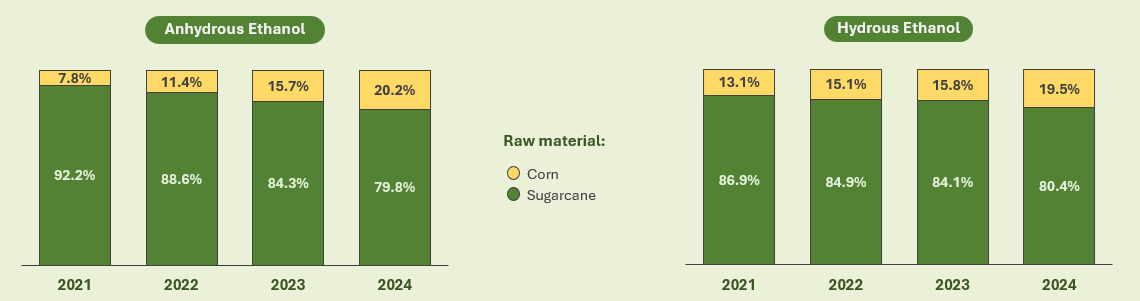
The national production of ethanol grew 2.8% compared to 2023, with corn standing out as a raw material in the production of this energy source, which reached 20% of the total produced in 2024.
Electricity
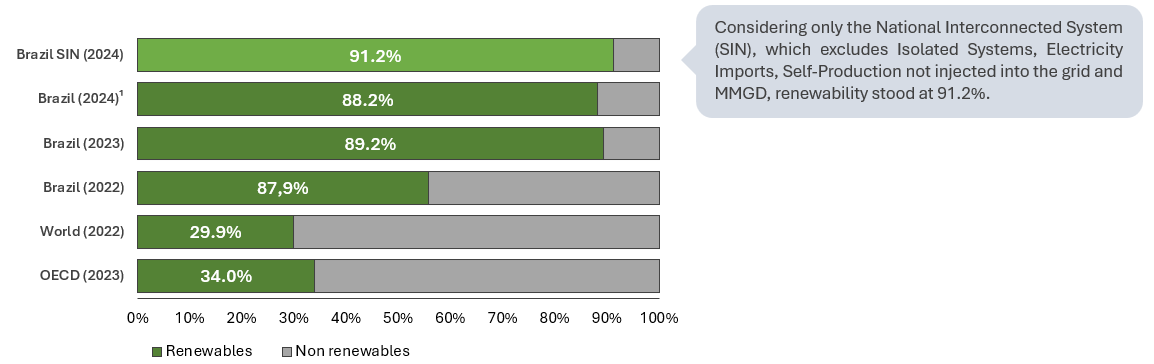
In the case of electricity, there was an increase in the Total Electric Power Supply (TEPS) of 39.7 TWh (+5.5%) compared to 2023. The share of renewables in the electricity mix stood at 88.2% in 2024.
Share of renewables in the Total Electric Power Supply (TEPS)
Together, wind and solar photovoltaic accounted for 23.7% of total electricity generation in the country in 2024, demonstrating the evolution of these sources in the Brazilian electricity mix. Distributed micro and minigeneration (MMGD) reached 5.6% of total electricity generation in Brazil in 2024.
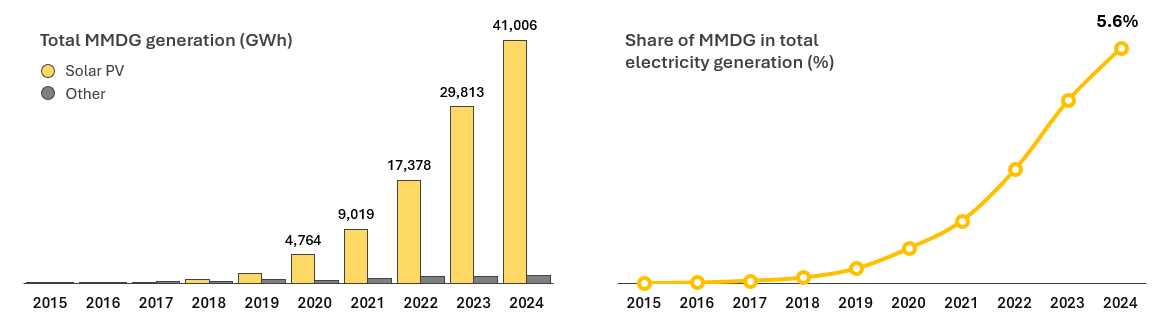
Solar photovoltaic generation reached 70.7 TWh (centralized generation and MMGD) growing 39.6% and its installed capacity reached 48,468 MW, an increase of 28.1% compared to the previous year.
Wind power reached 107.7 TWh (growth of 12.4%) and its installed capacity reached 29,550 MW, an increase of 3%. Hydropower generation remained stable.
In 2024, there was an increase of 11.4% in thermoelectric generation, totaling 151.2 TWh. The use of biomass stands out, which represented 40.6% of thermal generation.
Consumption
Energy consumption in industry, in addition to showing 1.4% growth compared to 2023, had 64.4% of renewability in its energy mix. Among the sources that contributed to the increase, electricity (+4.1%), coal and coal products (+3.5%) and firewood and charcoal (+2.1%) stand out. The renewability of the industry stood at 64.4%.
Energy consumption in the transport sector grew by 2.7% year-on-year, reaching 22.5% from renewable sources in 2024. The major highlights were the increases of 30.1% in hydrous ethanol and 19.3% in biodiesel. The movement of biodiesel was due to increases in the consumption of diesel oil and its content of mixture with mineral diesel to 14% (B14), as of March 2024.
There was a 5.5% expansion in final electricity consumption in the country in 2024. The sectors that contributed most to this advance were Residential, Commercial and Industrial, which recorded growth rates of 8.0%; 7.4% and 4.1%, respectively.
Emissions
In 2024, the total anthropogenic emissions associated with the Brazilian energy matrix reached 431.3 million tons of carbon dioxide equivalent (Mt CO2 eq), most of which (214.3 Mt CO2 eq) was generated in the transport sector.
In terms of emissions per inhabitant, each Brazilian, producing and consuming energy in 2024, emitted an average of 2.0 t CO2 eq.
CO2 emissions per capita (2022) in t CO2/inhab.
Source: International Energy Agency. Prepared by: EPE
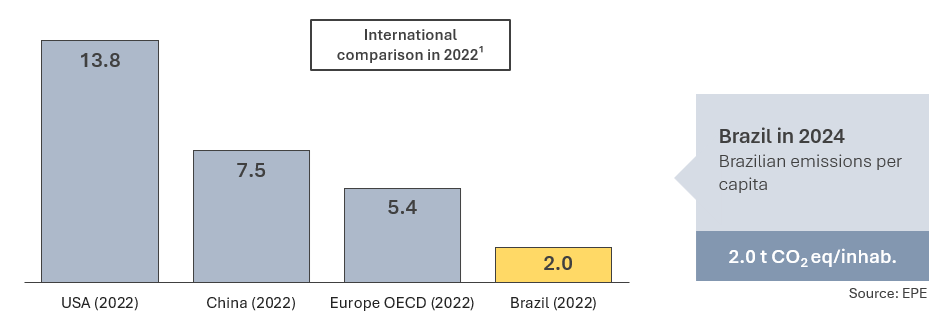
For the year 2022, each Brazilian issued the equivalent of 14.5% of what a US citizen emitted, 37.3% of what a European citizen of the OECD emitted and 26.7% of what a Chinese citizen emitted.
In 2024, the Brazilian electricity sector emitted only 59.9 kg CO2 eq to produce 1 MWh, a very low rate when comparisons are made with European OECD countries, the United States (USA) and China.
CO2 emissions (kg) per MWh generated (2022)
Source: International Energy Agency. Prepared by: EPE
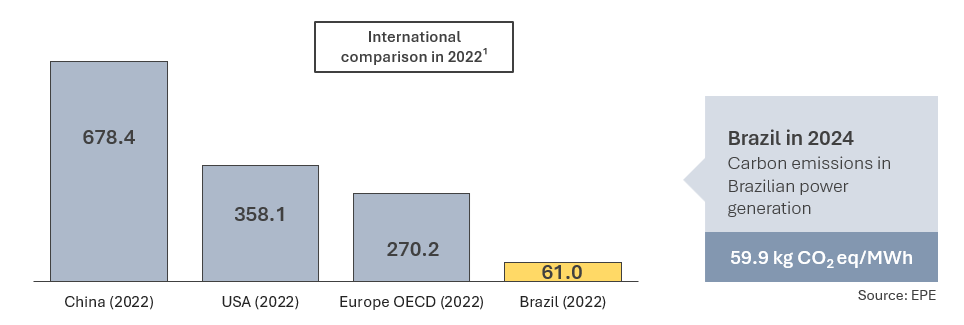
To produce 1 MWh, the Brazilian electricity sector emits about 23% of the value emitted by the European OECD countries, 17% of what is emitted by the US electricity sector and 9% of what is emitted by the Chinese electricity sector.
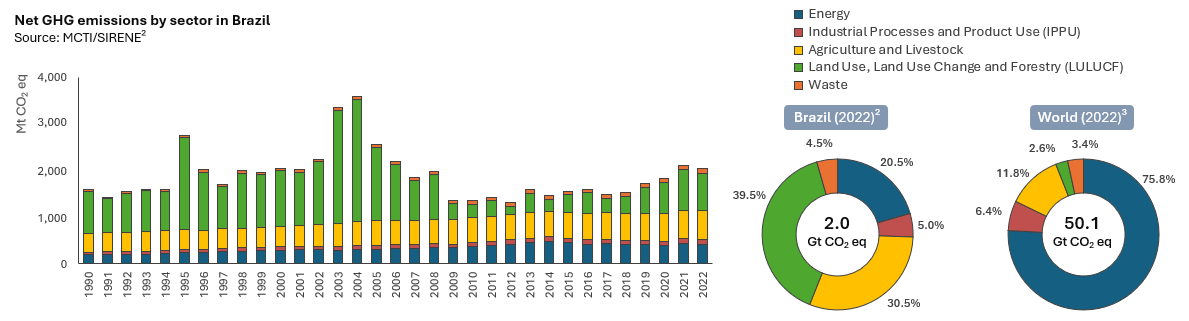
About 70% of Brazilian Greenhouse Gas emissions are concentrated in the Agriculture and Land Use, Land Use Change and Forestry (LULUCF) sectors, while emissions from the Energy sector corresponded to 20.5% of the total inventoried in 2022.
Access the Summary Report of BEN 2024
