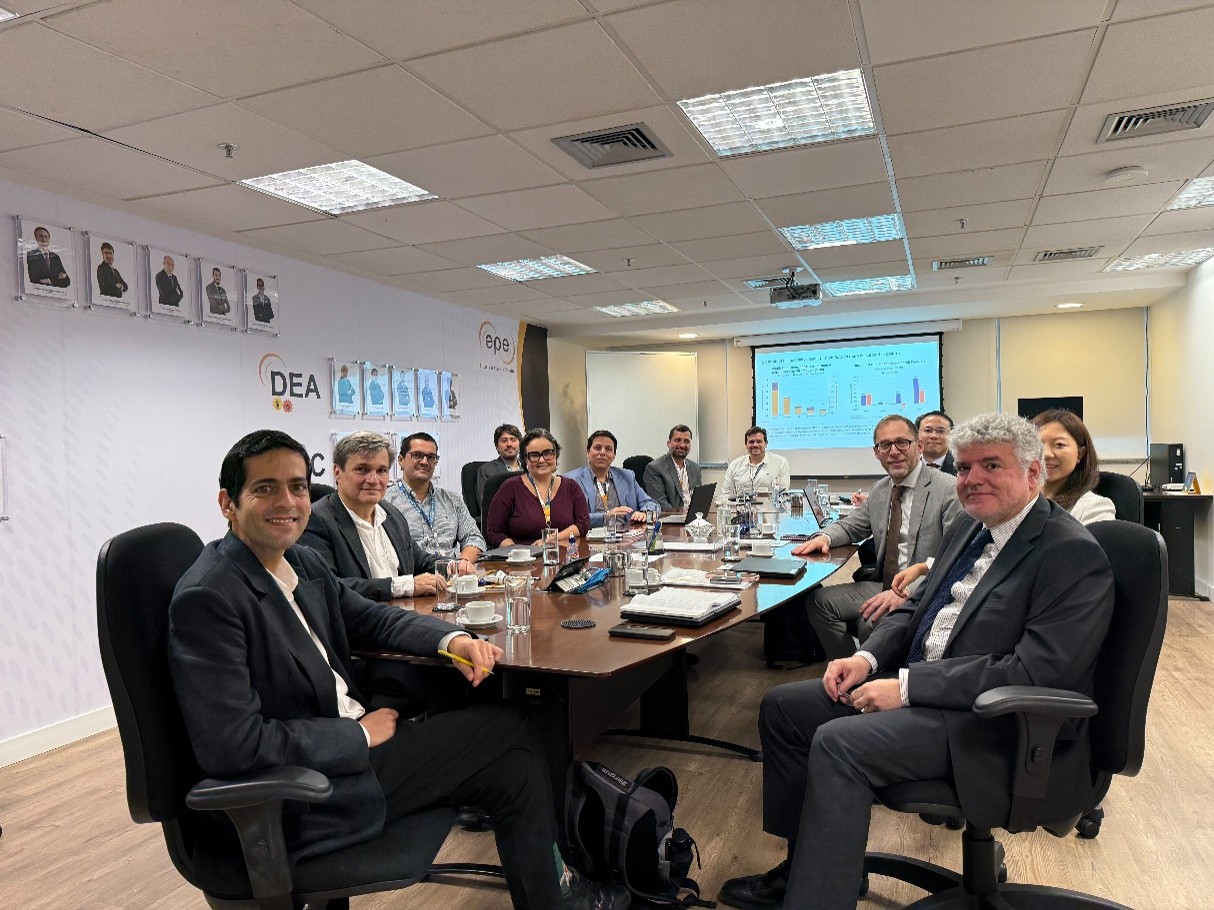
Meeting was part of the IMF's annual Article IV Mission to Brazil and addressed the impacts of oil and gas price volatility on the energy sector and the national economy.
The Energy Research Office (EPE) received, on May 22, representatives of the International Monetary Fund (IMF) for a technical meeting held as part of the annual mission related to Brazil's Article IV consultation. This year, one of the topics of interest of the mission was the impact of international oil and gas price volatility on national economies and productive sectors.
The meeting was led, on behalf of EPE, by its President, Thiago Prado, and, on behalf of the IMF, by Daniel Leigh, Mission Chief for Brazil.
During the meeting, EPE presented an integrated view of Brazil's energy sector in a context of greater global volatility. The presentation addressed the renewability of Brazil's energy matrix, the country's position as an oil producer and net oil exporter, its exposure to refined oil products — especially diesel and gasoline — as well as the role of biofuels, the renewable electricity matrix, and planned investments to strengthen national energy resilience.
EPE showed that Brazil's energy matrix provides relevant buffers against international volatility, including its high share of renewables, the role of biofuels, and the low dependence on oil and gas in power generation. At the same time, the analysis pointed out that the country's exposure remains concentrated in refined oil products, particularly diesel and gasoline, with potential effects on logistics, inflation and sectoral costs.
The meeting reinforced EPE's role in producing technical studies and maintaining dialogue with international organizations, contributing to public policy formulation, energy security and the advancement of Brazil's energy transition.